
India's wholesale price inflation surged to 8.30 per cent in April, up from 3.88 per cent in March, primarily driven by a significant increase in the prices of fuel, power, and crude petroleum, according to data from the commerce and industry ministry.

Aviation Turbine Fuel (ATF) prices have more than doubled to a record high, impacting airlines and consumers, while commercial LPG rates also see a significant increase.
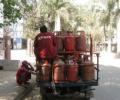
Now, non-subsidised liquefied petroleum gas price is hiked by Rs 26.5 per 14.2-kg cylinder.

The government on Friday said it would not increase the cooking gas and kerosene prices despite escalation in the prices globally.
Close on the heels of a 70 paise per litre hike in petrol prices, the Oil Ministry is pushing for an increase in diesel and domestic cooking gas LPG prices, even though it is unsure of political support for the unpopular move with the ruling UPA alliance.

Trinamool Congress leader Abhishek Banerjee alleges the BJP-led government may increase fuel prices after the West Bengal assembly elections, accusing them of neglecting the common man and withholding funds from the state.

Indian realty developers are contemplating price increases for ongoing and upcoming projects to offset margin pressures caused by rising input costs and supply chain disruptions, exacerbated by the West Asia conflict. Input and labour costs have surged by 5-12%, directly impacting developer margins, especially for under-construction projects.
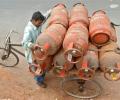
While jet fuel price was increased by Rs 2, subsidised LPG price has been hiked by Rs 4.50 per 14.2-kg cylinder. Non-subsidised LPG to cost Rs 93 more.

Escalating geopolitical tensions in West Asia are beginning to disrupt India's automotive supply chain, leading to rising commodity prices, logistics bottlenecks, material shortages, and pressure on consumer demand, with two-wheeler makers already raising prices.

India's retail inflation, measured by the Consumer Price Index (CPI), increased to 3.48 per cent in April, up from 3.40 per cent in March, primarily due to a surge in prices of gold and silver jewellery, as well as certain kitchen staples like tomatoes and cauliflower.

Nath's comments came amid the Congress party's continuous attack on Centre for the recent hike in commercial LPG cylinders and the Aviation Turbine Fuel (ATF).

Companies are already diversifying sourcing, raising prices, and reworking operating models as the disruption drags on.

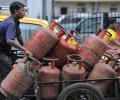
All subsidies will be eliminated by March 2018
The price of non-subsidised LPG, which customers buy after using up their quota of 12 subsidised cylinders, was raised by Rs 16.50 per 14.2-kg cylinder, the first hike in six months.
The government said on Tuesday that oil marketing companies are considering price revision of domestic LPG due to increase in international prices.\n\n\n\n

Air fares to go up as ATF price is hiked by 8.2%.
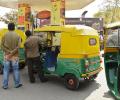
CNG price in the national capital on Friday was hiked by 80 paise per kg, while piped cooking gas rates were increased by a steep Rs 5 per cubic metre on the back of the government raising input natural gas prices to record levels. CNG price in the National Capital Territory (NCT) of Delhi has been increased to Rs 60.81 per kg from Rs 60.01, according to information posted on the website of Indraprastha Gas Ltd (IGL) -- the firm which retails CNG and piped cooking gas in the national capital. This is the sixth increase in CNG prices in the last month.

Aviation turbine fuel or jet fuel price was on Wednesday hiked by a steep 9.2 per cent, while that of non-subsidised cooking gas was raised by Rs 21 per cylinder.

Reliance Industries (RIL) delivered a better-than-expected operational performance in Q1FY27, driven by a recovery in its oil-to-chemicals (O2C) business and robust gains in the telecom (Jio) segment, though its retail arm missed estimates. Analysts highlight the upcoming Jio Platforms IPO and execution in new energy and consumer businesses as key triggers for the stock's future growth.
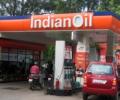
Prime Minister's Economic Advisory Council Chairman C Rangarajan on Thursday pitched for a "substantial" increase in prices of diesel and cooking gas, saying failure to take strong steps would derail the fiscal consolidation process.
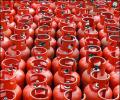
Reliance Industries on Friday dubbed as a "canard" allegations that the near-doubling of natural gas prices will lead to a similar hike in domestic cooking gas (LPG) and inflation in food item rates.

Tamil Nadu Petroleum Dealers' Association urged people not to panic-buy petrol or diesel, stating that 14 terminals in Tamil Nadu have enough stock to replenish 7,000-plus retail outlets as per their demand.
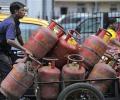
Rates have been on the upswing since October, 2016.

The petroleum ministry on Friday reaffirmed the government's commitment to maintaining stable petrol and diesel prices, despite India's high dependence on imports.

India has no plans to ration fuel supplies despite ongoing disruptions in global energy markets, according to a top oil ministry official. The country has maintained adequate inventories of crude products and LPG while diversifying imports to manage supply risks.

West Bengal Chief Minister Mamata Banerjee on Thursday asked all political parties, including those supporting the United Progressive Alliance government from outside, to build pressure for roll back of hike in price of non-subsidised cooking gas.

Jet fuel constitutes over 40 per cent of an airline's operating costs and the price increase will raise the financial burden on cash-strapped carriers.
The empowered group of ministers headed by Finance Minister Pranab Mukherjee is being convened soon to discuss a combination of a price hike and a reduction in government duties.

The proposed facility seeks to simplify and speed up PF withdrawals by allowing Employees' Provident Fund Organisation (EPFO) subscribers to access up to 75 per cent of their balance through ATMs and UPI-based systems, while retaining at least 25 per cent in their accounts.

'Nobody explained why. After that there was panic buying, there was hoarding -- and then nothing reached us.'
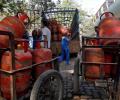
Finance Minister Nirmala Sitharaman cut fuel subsidies while slapping additional fuel taxes on unblended transport fuels in the latest Union Budget. The former will hit the rural poor, households that secured a subsidised LPG connection under the Pradhan Mantri Ujjwala Yojana (PMUY), a programme that was partly instrumental in helping the Bharatiya Janata Party (BJP) win the 2019 general elections. The latter will pretty much hurt the entire population after it kicks in from October. That's what it looks like. Or, perhaps, it's not as it appears to be, at least on the subsidy front.

Indian oil marketing companies are incurring significant losses, selling petrol at a Rs 14 per litre loss and diesel at Rs 18 per litre, as elevated global crude oil prices, exacerbated by the West Asia crisis, outpace capped retail fuel rates, according to rating agency Icra.

Opposition parties are demanding a full Parliament discussion on the West Asia conflict, criticising the government's silence and calling for a contingency plan to protect India's energy security and citizens.
The government is considering a 3-rupee to 5-rupee hike in the price of diesel, which accounts for more than 40 percent of fuel use, government officials said last week, as the country looks to cut import costs by nearly $20 billion to trim a record current account deficit.

The protesters led by the state unit Bharatiya Janata Party chief C P Thakur burnt the effigy of the prime minister at the busy Dak Bungalow roundabout.

Suzuki Motorcycle India Ltd (SMIPL) has revised its domestic two-wheeler sales growth estimate for FY27 downwards from 7-8 per cent, citing rising commodity costs due to the ongoing West Asia conflict and its impact on consumer affordability.

Analysts warn that global markets are significantly underpricing the risk of an oil price shock, with Brent crude potentially soaring to $150 per barrel if the West Asia conflict escalates or damages critical oil and gas infrastructure. This could lead to severe inflation and economic repercussions, particularly for import-dependent nations like India.
Time opportune before state polls as inflation is moderating.

The government does not seem inclined, at least in the petroleum sector, to effect sudden and steep upward price revisions to tame its huge subsidy burden and rein in fiscal deficit.
